
Copperhill Flood: What It Means for Septic Systems
Overnight on November 4 into November 5, the Ocoee River flooded downtown Copperhill in Polk County and McCaysville across the Georgia line. The National Weather Service measured 10.28 inches of rain in six hours in the mountains above the towns and called it a 1,000-year flood, according to the Associated Press. It was the second time this year: the same towns flooded in August.
A record crest at Copperhill
The river crested at a record 18.05 feet at Copperhill around 6 a.m. on November 5, WSMV reported. The Tennessee Emergency Management Agency later put the rescue count at more than 100 people and 25 dogs across both states, per WVLT. Tennessee Fire Mutual Aid sent 65 firefighters from 18 departments.
Polk County Executive Stan Howard said 45 homes and 42 businesses in Tennessee were affected. No one died in Tennessee. On November 9, TEMA said FEMA and the Small Business Administration had been asked to assess the damage for possible federal aid, NewsChannel 9 reported.
The shared water plant for the two towns went down. Copperhill lifted its boil water advisory on the night of November 9. McCaysville was still waiting on bacteria tests a day later.
What a flood does to a septic system
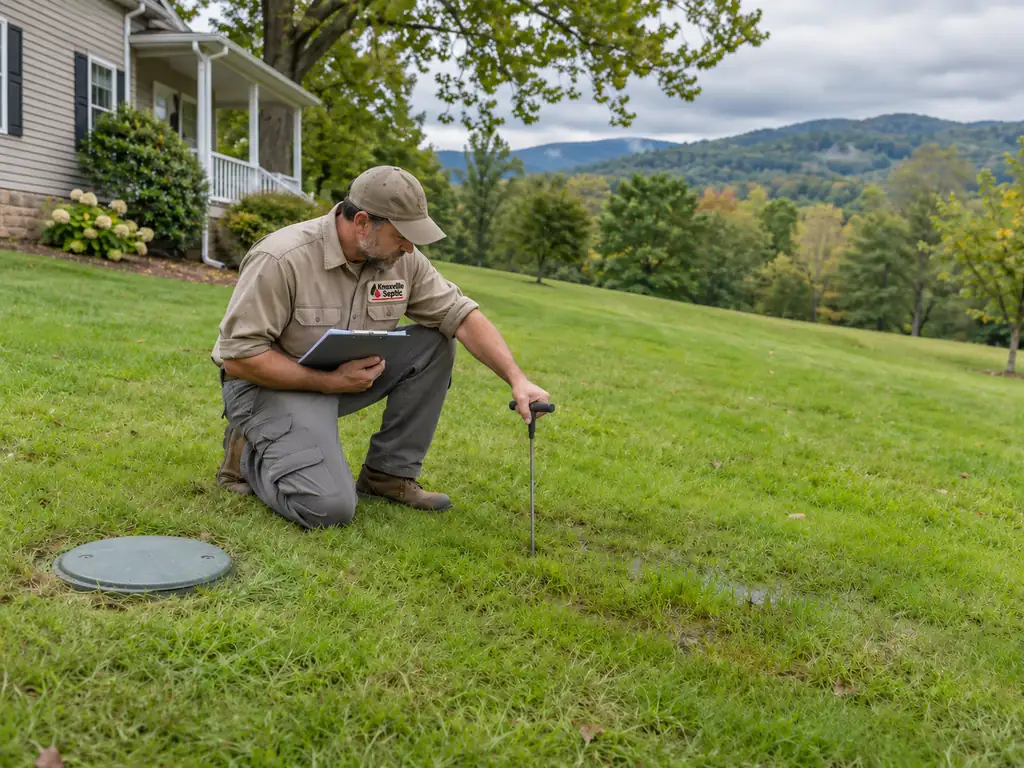
A septic system needs dry soil to work. The tank settles the solids, and the liquid runs out into the drain field, where the soil cleans it. When the ground is under water, the liquid has nowhere to go, so it backs up into the house or comes up in the yard.
The EPA’s guidance for septic systems after a flood comes down to a few points:
- Don’t use the system until the water in the drain field area is lower than the water around the house.
- Don’t pump the tank while the drain field is flooded or saturated. An emptied tank in wet ground can be pushed up out of the ground, and the pipes can break.
- Do get it pumped once the ground drains. Floodwater carries silt and debris into the tank.
- Get the tank and field inspected if you think anything was damaged. A field clogged with silt may need replacing.
- Don’t open or repair the tank yourself. The gases inside can be dangerous.
- Don’t drink well water until it has been tested. Call the county health department about testing.
After the water goes down
Copperhill is south of us, but heavy rain is not. The time to deal with a septic system after a flood is once the ground has drained, not while the water is still standing. If a wet spell leaves your yard soggy over the drain field for days, read the signs of a failing drain field and, when it’s dry enough, book a pump-out and an inspection.
What it means for a Knox County septic owner
Knox County was not flooded this time, but our clay holds water the same way. If your yard ever goes under, do not pump the tank while the drain field is still soaked: a near-empty tank in saturated ground can float out of the hole. Use as little water as you can, wait for the ground to drain, then have the tank pumped and the field checked. If you are on a well, do not drink from it until it has been tested.
Sources: AJC / Associated Press, WSMV, WVLT, NewsChannel 9: Copperhill lifts boil water advisory, NewsChannel 9, EPA: Septic Systems, What to Do after the Flood