
Septic Maintenance: What to Do and What to Avoid
Septic maintenance comes down to pumping on schedule, keeping water use steady, and keeping grease, wipes and chemicals out of the drains.
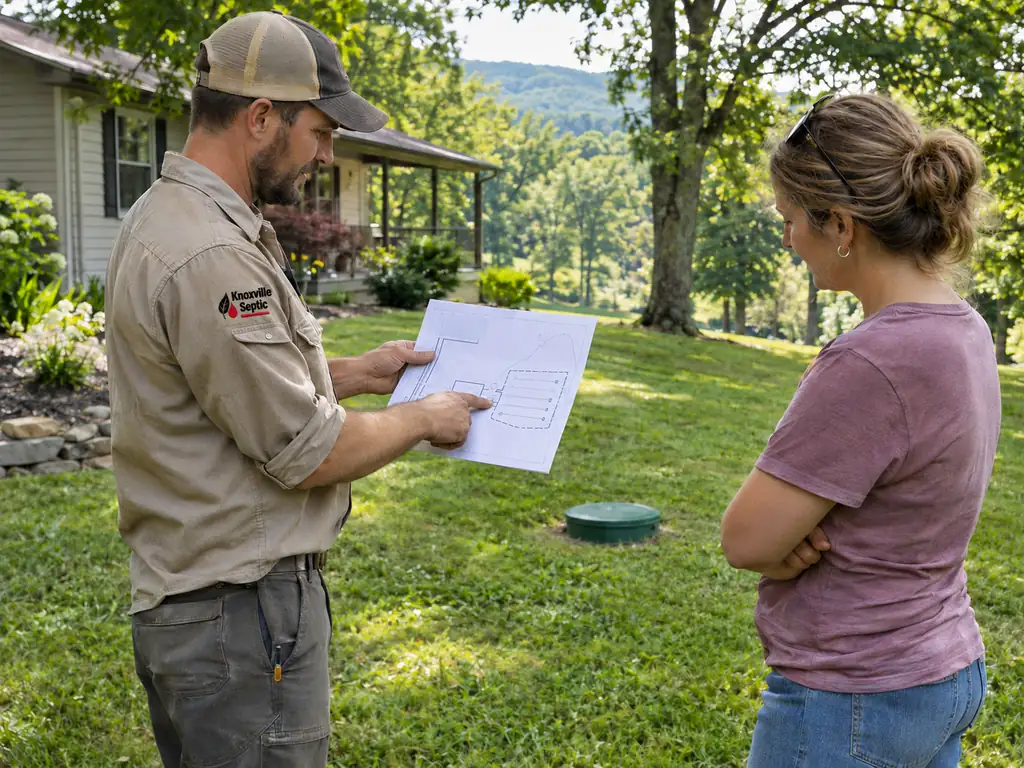
What to do
- Pump on schedule and keep the receipt. The date and the gallons pumped tell the next person when it is due. Our pumping calculator gives you a starting interval.
- Spread the water out. Five loads of laundry on a Saturday sends more water to the field in a day than it can take on clay. One or two a day is easier on it.
- Fix leaks. A running toilet can send hundreds of gallons a day into the tank.
- Send roof water somewhere else. Point gutters and downspouts away from the tank and the field.
- Know where the tank is, and think about a riser so the lid sits at ground level. It makes every pump-out quicker and cheaper.
What not to flush
Only toilet paper and what the body produces. Everything else either will not break down or kills the bacteria that do the work:
- Wipes, including the ones labeled flushable.
- Paper towels, tissues, cotton swabs and feminine products.
- Cooking grease and fat. It floats, hardens, and builds up the scum layer.
- Cat litter, coffee grounds and cigarette butts.
- Medicines, paint, solvents and harsh drain cleaners.
A garbage disposal adds a lot of solids, so a house that uses one needs pumping more often. Tank additives are not needed: EPA says a working tank has all the bacteria it needs already.
What to keep off the drain field
- Vehicles and heavy equipment. They crush the pipes and pack the soil, and clay does not recover from it.
- Buildings, decks, pools and paving. The field needs air and room to dry out, and someone may need to dig it up one day.
- Trees and big shrubs. Roots go looking for the water in the trenches. Grass is the best cover for a field.
- Extra water. Keep sprinklers, sump pump discharge and downspouts off it.
In Knox County
Clay drain fields in Knox County have less margin than sandy ones, so the cheap habits here protect a field that is expensive to replace.